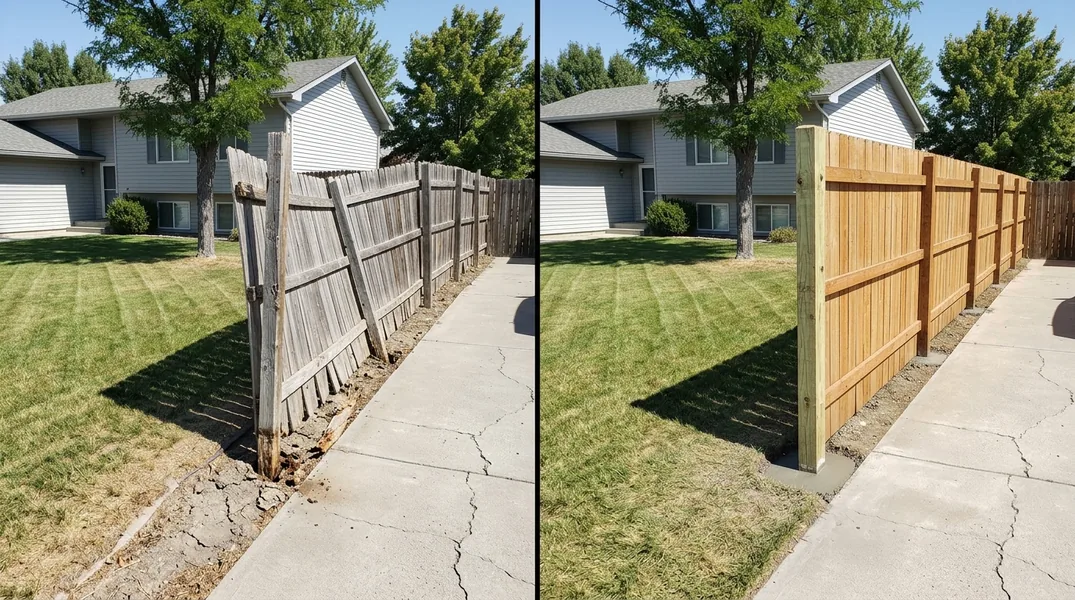
Understanding Why Your Kennewick Fence Leans
If you've noticed your fence leaning to one side, you're not alone. Many homeowners in Kennewick face this frustrating problem, and the causes are often rooted in the region's unique environmental conditions. A leaning fence isn't just an eyesore; it's a sign that something structural needs attention before the problem worsens.
The most common culprits behind leaning fences in our area are windstorms, soil composition, and deteriorating fence posts. Kennewick experiences significant wind events, particularly during spring and fall, which can exert tremendous lateral force on fence structures. When combined with the region's notoriously loose silt soil, even well-installed fences can gradually shift out of plumb over time. Understanding these factors is the first step toward finding the right solution for your property.
The Impact of Windstorms on Fence Stability
Wind is one of the most destructive forces acting on fences, and the Tri-Cities area experiences some powerful gusts. Windstorms don't just push on your fence once; they create repetitive stress that accumulates over months and years. Each gust flexes the fence structure, loosening connections and gradually shifting posts in their foundation holes. If your fence was installed in loose silt soil without proper compaction or bracing, wind damage can manifest as a noticeable lean within just a few seasons.
The problem is compounded when fence posts begin to rot or weaken. Wind-damaged fence posts lose their structural integrity faster than posts in stable soil, creating a vicious cycle where each storm makes the lean worse. This is why Wood & Privacy Fence Installation in our region must account for wind loads during the initial design phase. Homeowners who notice their fence leaning after a major storm should act quickly, as waiting allows the damage to spread to adjacent sections and increase repair costs significantly.
Loose Silt Soil: A Hidden Enemy for Fence Posts
One of the biggest challenges facing fence installations in Kennewick is the prevalence of loose, silty soil. Unlike clay-based soils that compact and hold posts firmly in place, silt is granular and prone to shifting. When water percolates through silt or wind creates vibrations, the soil particles can settle and compact unevenly, leaving gaps around fence posts. Over time, these gaps allow posts to move laterally, especially under wind pressure.
The silt composition also affects drainage around posts. Silt doesn't retain water like clay, but it also doesn't drain as quickly as sandy soil. This creates an environment where moisture can linger around the base of wooden posts, accelerating rot and decay. A rotted fence post becomes increasingly unstable, unable to resist even moderate wind forces. This is why proper post installation techniques, including adequate concrete footings and post depth, are critical in our region. Posts that are set too shallow in silt soil are virtually guaranteed to lean eventually, regardless of the quality of the wood or the strength of the fence panels.
Identifying Rotted Fence Post Repair Needs
Before you can fix a leaning fence, you need to determine whether the lean is caused by loose soil, wind damage, or rotted posts. The best way to assess this is to examine the base of the posts and the soil around them. Look for signs of soft or discolored wood, especially at ground level where moisture accumulates most. If you can easily push on a post and feel it move in the soil, that's a clear sign the post has either rotted or lost its footing in the silt. You might also notice that the post feels spongy or that you can poke your finger into the wood, both indicators of advanced decay.
Rotted fence post repair is essential because a compromised post won't support the fence properly, no matter how well the rest of the structure is built. The rot weakens the post's ability to resist lateral forces, making it susceptible to further leaning or even failure during high winds. If you suspect rotted posts, don't delay in getting a professional assessment. A qualified fence contractor can determine the extent of the damage and recommend whether the post can be reinforced or needs complete replacement. The longer you wait, the more likely the rot will spread to adjacent posts and sections of your fence.
Professional Leaning Fence Repair and Wind Damaged Fence Posts
Repairing a leaning fence requires more than just pushing it back upright. The underlying cause must be addressed to ensure the repair lasts. For wind damaged fence posts, this might involve installing additional bracing, reinforcing the post-to-rail connections, or replacing the damaged post entirely with a properly installed, deeper-set post. Professional contractors have the experience and tools to assess whether a post can be salvaged or needs replacement, and they understand how to install posts in silt soil to prevent future leaning.
One effective approach for wind damaged fence posts is to install them deeper than the standard 2 to 3 feet, particularly in loose silt. Many professionals recommend 3 to 4 feet of post depth in our region to provide better stability against wind forces. Additionally, using concrete footings that extend below the frost line and incorporating proper compaction techniques ensures posts stay firmly in place. If your fence has already started leaning, a contractor might also recommend sistering (attaching a new post alongside the old one) or installing diagonal bracing to redistribute forces and restore stability. Getting a free estimate from Kennewick Fence allows you to understand your options and the scope of work needed.
Prevention and Long-Term Fence Maintenance
The best remedy for leaning fences is prevention. When you're planning a new fence installation, whether it's Wood & Privacy Fence Installation or another style, ensure the contractor understands the challenges of Kennewick's soil and climate. Posts should be set deep, properly compacted, and anchored in concrete. The fence design should account for wind loads, and materials should be selected for durability in our environment. Regular maintenance also plays a crucial role in preventing future problems.
Inspect your fence at least twice a year, especially after major wind events. Look for signs of leaning, rotting wood, loose connections, or soil erosion around posts. Address small issues before they become major problems. If you notice any of these warning signs, contact Kennewick Fence at (509) 581-6734 to schedule an inspection. Early intervention can save thousands of dollars in repair costs and extend the life of your fence significantly. Whether you're dealing with an existing leaning fence or planning a new installation that will withstand Kennewick's challenging conditions, professional guidance ensures your investment is protected for years to come.
Looking for a professional fence contractor in Kennewick? Kennewick Fence responds fast for all your fence needs.
Get a Free Quote