Fence Company in Kennewick, WA: Installation, Repair & Gates
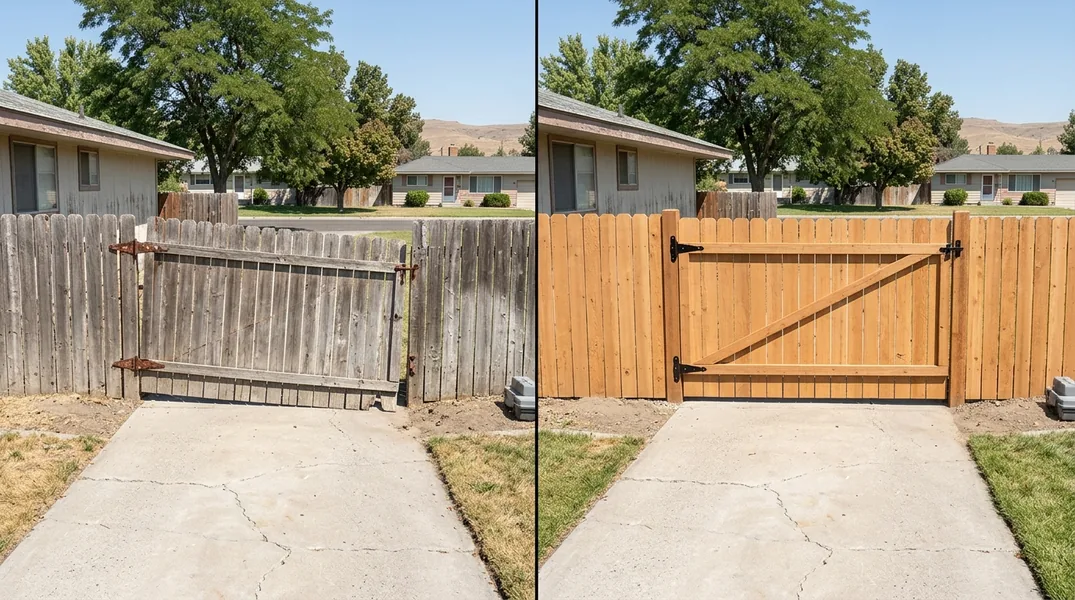
Kennewick Fence serves homeowners and property owners across Kennewick, Richland, West Richland, and surrounding areas with the full range of fence work: new installation in wood, vinyl, chain link, and aluminum or ornamental iron; repair of existing fences; gate installation and repair; and emergency work after severe weather. We are a local fence company, not a national franchise, and the same crews handle your project from start to finish. Whether you are searching for a fence company near me in Kennewick or need help with a fence that has failed, we start with a walk-around assessment and an honest recommendation.
This corner of Washington presents specific challenges. The fine silt and clay soil here swells when wet and shrinks when dry, working fence posts back and forth through the seasons. Spring and fall windstorms push long runs sideways. Summer heat near 100 degrees and intense UV light gray and crack wood, and winter cold snaps freeze the ground hard. A fence that performs well here is built to handle that climate, and repair decisions need to account for it. Call (509) 581-6734 for a free estimate, or read more about fence repair in our area.
Why Fences Lean in Kennewick: Clay Soil and Rotted Posts
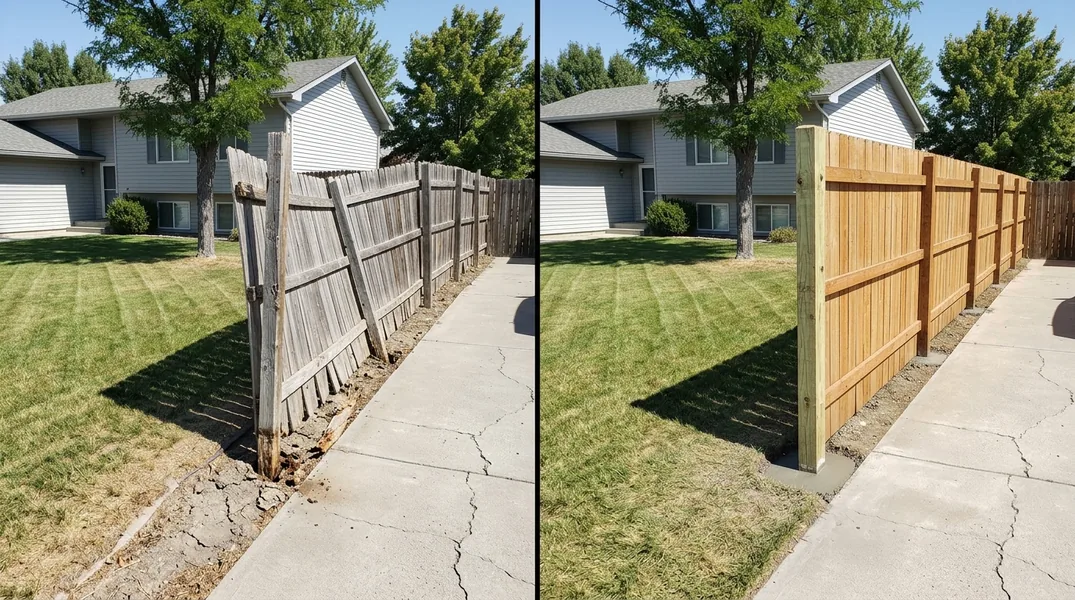
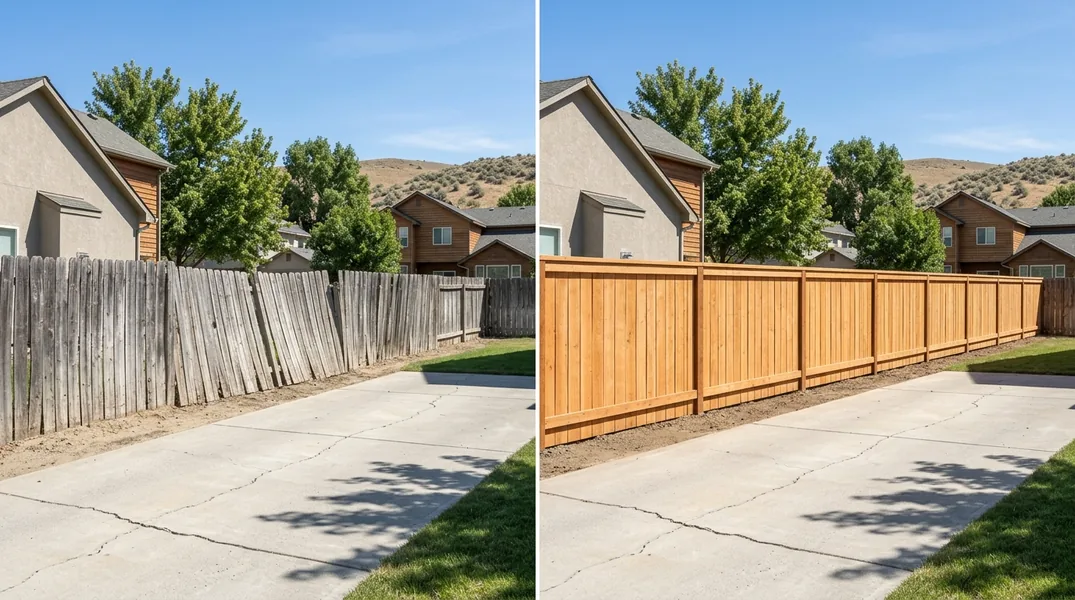
Most leaning fences in Kennewick fail at the post, not the panel. The clay soil here expands when sprinklers run or winter snow melts, then shrinks as the ground dries out over summer. That seasonal heave and settlement work a post back and forth, racking it out of plumb year after year. At the same time, moisture collects at the ground line where the post sits, and wood exposed to that damp cycle rots from the base up. A post that looked sound three years ago can lose its structural integrity right where it carries the load, and the fence begins to lean or sag. A vinyl or chain link fence may follow, pulling panels out of square or snapping the fasteners.
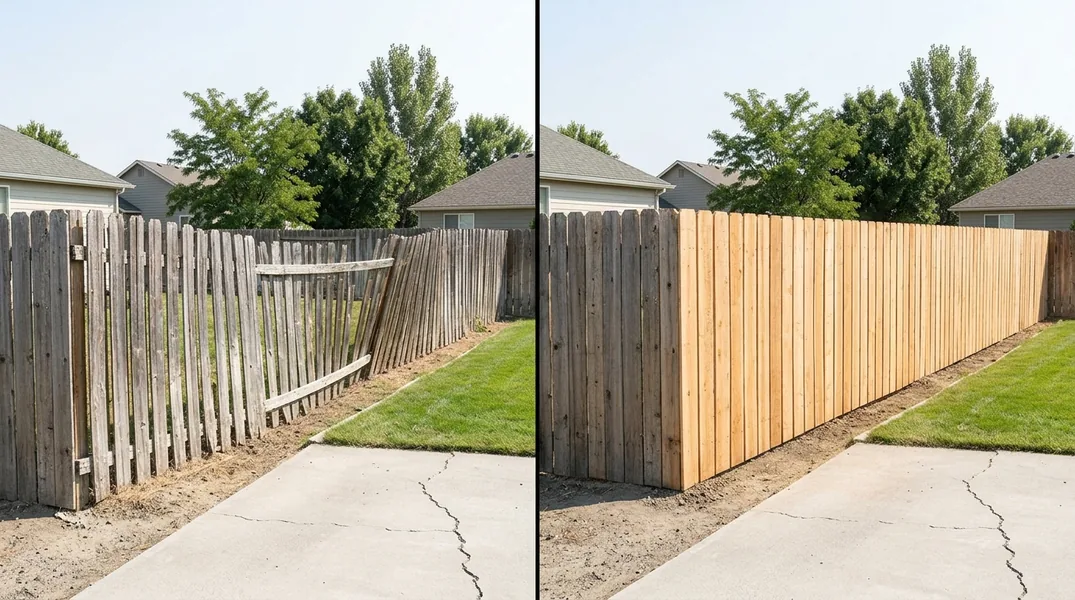
We assess a fence by walking the entire line and testing every post, not just the one section a homeowner noticed moving. We check whether a post has failed inside a sound concrete footing, or whether the footing itself has heaved. We look at the condition of the pickets, rails, and stringers to see whether the rest of the fence is worth saving. This matters because the honest call is often to repair: if the pickets and rails are sound and only a handful of posts have failed, resetting or replacing those posts and keeping the rest of the structure saves money and holds the fence line for years to come. But when posts have rotted at the ground line all the way down a run, or when the concrete footings have heaved across the whole fence, repair becomes a series of patch jobs that costs more over five years than replacement does once. We quote both options when both are real, and we explain the difference. On rotted wood: we replace wood that has decayed at the ground line. Moisture at the base of the post is the cause. We do not perform termite or pest inspections, apply chemical treatments, or carry out pest control, which is a separate regulated trade in Washington. If you have questions about what we find, call (509) 581-6734 or request a free estimate. Read more about fence post repair and replacement.
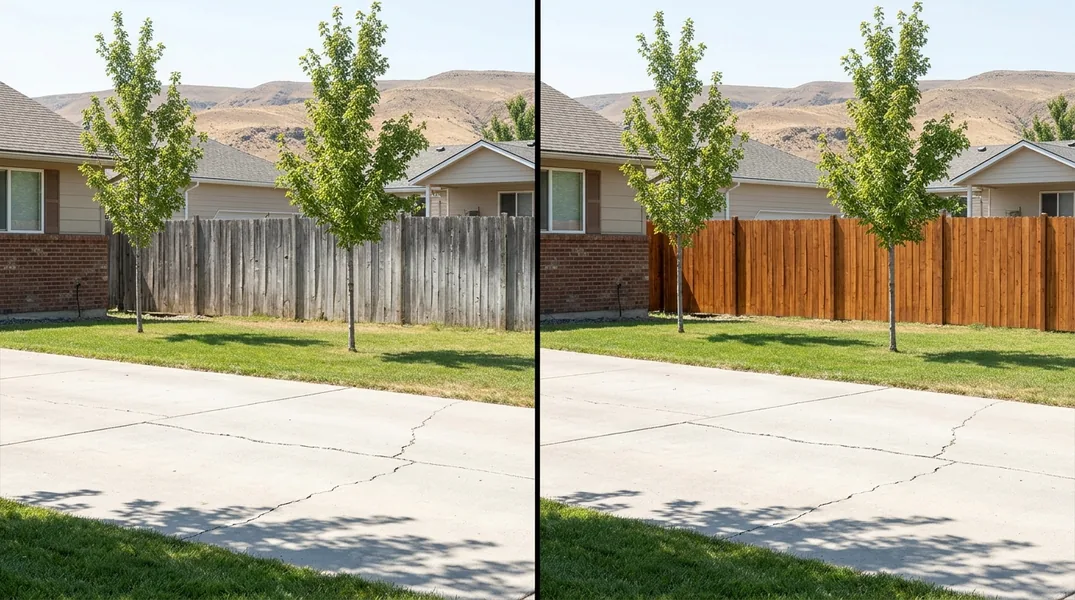
The maintenance reality matters too. A cedar fence in this climate wants cleaning and re-staining every two to three years if you want it to last close to twenty years. Skip that cycle, and you will see twenty years closer to ten. Pressure-treated pine is more forgiving but less beautiful. Vinyl and chain link ask almost nothing of you. When you are ready to decide, we can walk through what each material actually costs to own over time, and we quote by the linear foot on site.
Storm Damage Fence Repair in Kennewick
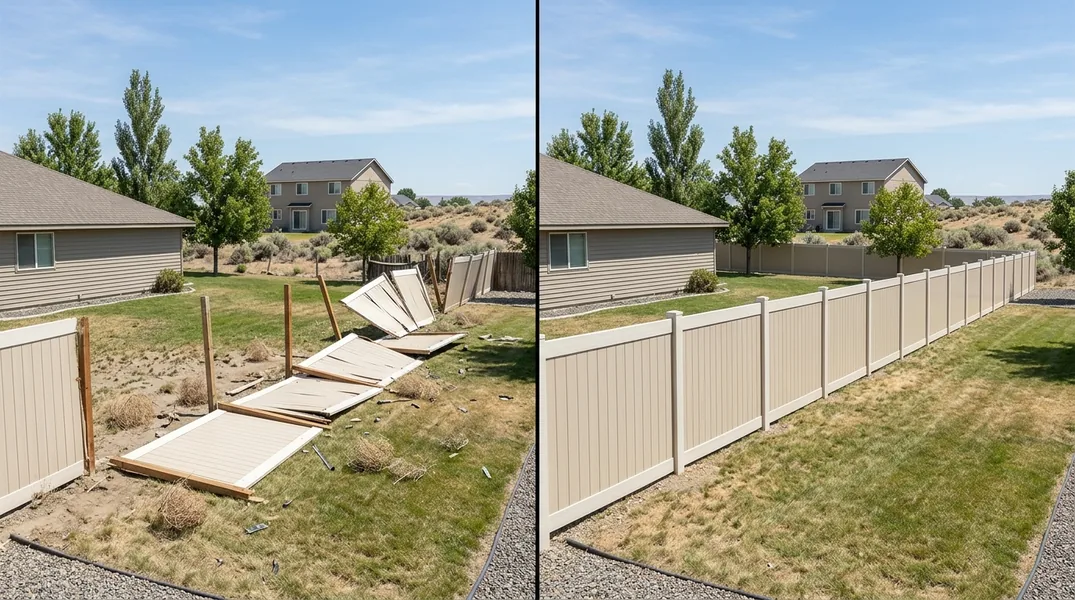
Spring and fall windstorms here can push entire runs of fence over on the same line, snap posts at grade, or tear panels away completely. A fence rebuilt after a storm is a chance to do it better: we can reset posts deeper, use larger diameter stock, and brace against sag so the fence does not fail the same way twice. We provide a free damage assessment, photograph the fence section by section, and prepare a written estimate that you can share with your insurance carrier if you choose. We can help document the damage for your claim, but coverage decisions rest with your insurer. Not every damage claim is approved, and not every repair is covered. We do not adjust claims, waive deductibles, or represent you to your carrier. What we do is give you clear information about what failed and what it will cost to repair or replace. Read more about storm damage fence repair.
If you have fence damage from severe weather, do not wait for the season to pass. Call us as soon as it is safe to do so, and we will schedule an assessment. The sooner we see the damage, the sooner you can file a claim and move forward with repair.
Cedar, Pine, Vinyl or Chain Link: Choosing for This Climate
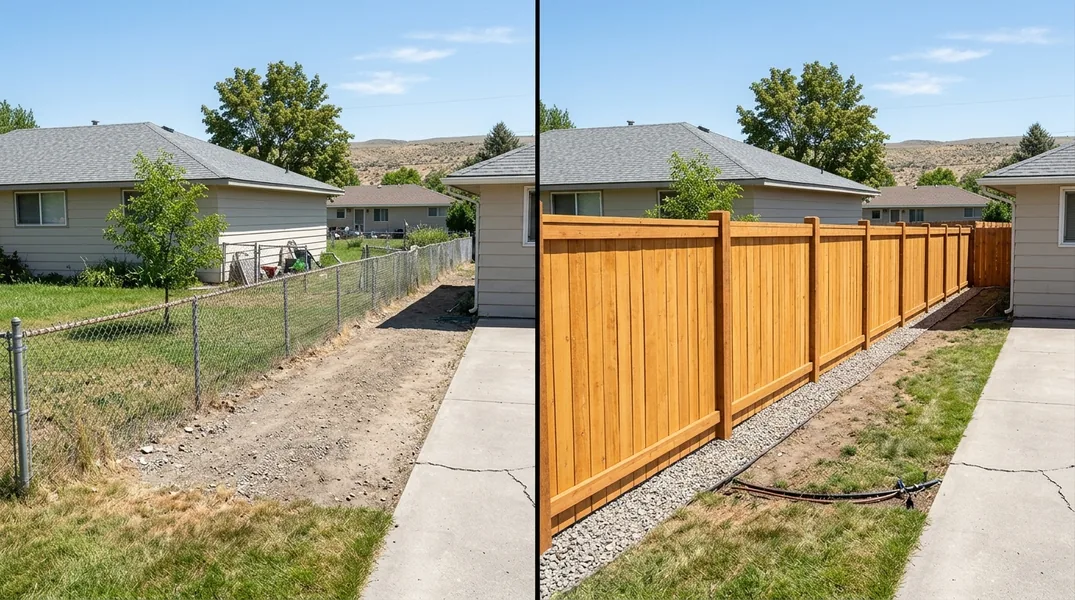
Choosing the right material for a Kennewick fence means balancing durability, maintenance, and budget against the local climate. Cedar is beautiful and weathers to a soft gray, but it needs regular cleaning and re-staining to hold up under this sun and heat. Pressure-treated pine is more affordable and requires less fussing, though it will never have cedar's appearance. Vinyl is low-maintenance and shrugs off UV and heat better than wood, but it is not the right choice everywhere: it can look out of place on a property with traditional framing, and it does not work well for side-by-side board installations on sloped ground. Chain link is the toughest per dollar spent, and the gauge and mesh size matter for durability and appearance. Galvanized chain link is practical and long-lasting; powder-coated black or brown chain link looks cleaner and blends better with landscaping. Aluminum and ornamental iron are ideal for front yards, pools, and anywhere you need to rack the fence to follow grade without the panels looking awkward. Each material has real trade-offs, and the best choice depends on what you value most.
We quote fence work by the linear foot because the cost changes with slope, site access, whether there is old fence to remove, and how many gates you need. A fence on level ground with a straight line and no obstructions costs less per foot than one that has to step or rack across a hillside or navigate around trees and utilities. We measure on site and explain what we are pricing, so you understand what you are paying for. Read more about wood and privacy fence, vinyl fence, chain link fence, and aluminum and ornamental iron fencing.
Permits, HOA Rules, Property Lines & Pool Barriers
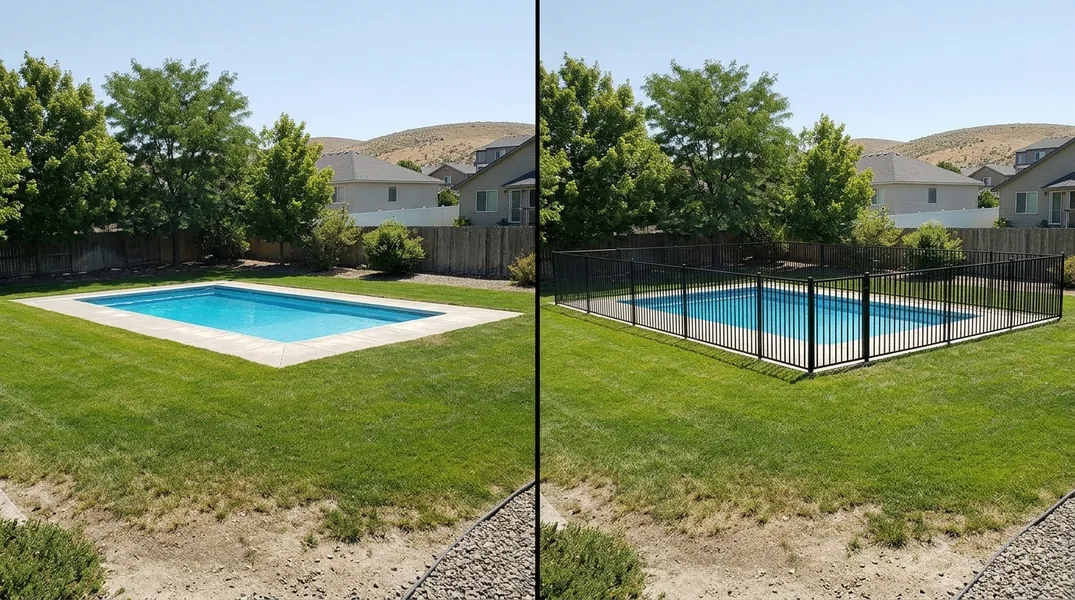
Fence regulations in the Tri-Cities vary by city and county. In most jurisdictions, fence height is limited to four or six feet depending on setback and location, and corner-visibility rules govern how much fence can be placed near a street intersection. Many cities in the area require a permit before you start, though requirements differ. In master-planned communities and neighborhoods with an HOA, deed restrictions and architectural guidelines often control fence height, material, setback, and color, and you will usually need approval from the architectural review board before work begins. It is worth checking your local rules and any HOA restrictions in writing before you call us. We install on the fence line you identify, working from your existing survey or property plat. Determining a property boundary is the work of a licensed land surveyor, and we do not perform surveys or offer opinions on where a line lies. If you are uncertain about your property line or a neighbor's rights, we recommend confirming the line in writing and getting any necessary neighbor consent before starting. For pool barriers, we install self-closing self-latching hardware and build to meet the pool barrier codes that apply at your address. We do not certify compliance or act as a pool barrier inspector. Final determination of compliance rests with the local building official. No barrier replaces supervision of children. When we set posts, we request a Washington 811 utility locate before digging. Utility locates cover participating operators only and do not mark private lines such as irrigation systems or landscape lighting, so please let us know if you have those on your property.
Requirements vary by location and situation. Always verify with the Kennewick building department and your HOA before starting your project. If you have questions about permits, setbacks, or whether your fence plan fits local rules, we can discuss it when you call for a free estimate.
Ready to get started? Kennewick Fence serves in Kennewick and surrounding areas. Book your free on-site estimate today.
Get Your Free Estimate