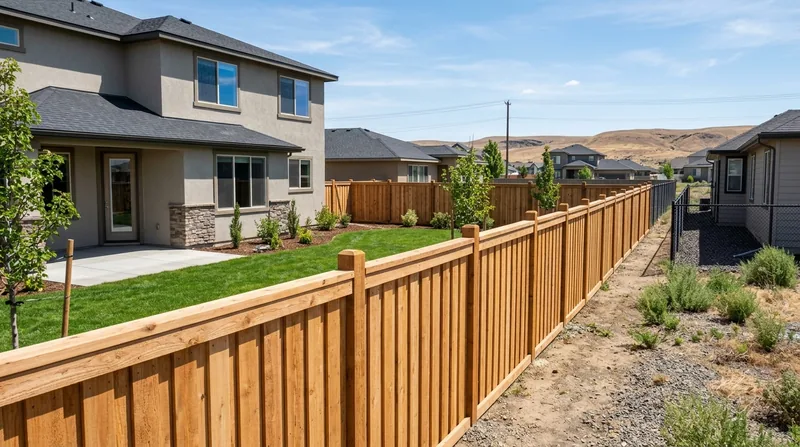




Kennewick's classic privacy fence installation means building a 6-foot cedar or pressure-treated barrier that stands up to Columbia Basin wind, blazing summer heat near 100 degrees, and the fine silt soil that shifts and settles across the wide flat lots of central Kennewick and the newer subdivisions climbing west toward Pasco. Spring and fall windstorms push long panels over if posts aren't set deep in concrete and braced properly. Summer UV cracks and grays wood fast. Winter freeze-thaw cycles heave shallow posts. We build fences that hold in this climate, and we tell you honestly when cedar is worth the cost and when vinyl is the smarter call for the Tri-Cities environment.
Why Privacy Fence Installation Matters in Kennewick's Dry Climate
Kennewick homeowners build privacy fences for real reasons: to block wind-driven dust from neighboring lots, create a sound barrier from the street or alley, define property lines on those wide open parcels around Vista Field and the newer Canyon Lakes homes, and shelter yards from the intense high-desert sun and the neighbor's view. A poorly built fence fails fast here. Posts set shallow in loose silt heave in winter and lean by spring. Untreated wood cracks and grays within two summers. Panels rack and twist in the spring gusts that funnel down the Columbia River corridor. The right installation, done once, lasts 15 to 20 years or more.
- Set posts 3 to 4 feet deep in concrete to resist frost heave and wind load in our loose, fine-silt soil.
- Choose pressure-treated pine or cedar based on your budget, local HOA rules, and how long you plan to own the home.
- Install board-on-board or side-by-side pickets to block wind and dust without creating a sail that catches the spring storms.
- Space posts 6 feet apart maximum, with anti-sag bracing on any run longer than 50 feet to keep panels square.
- Add a cap rail and trim to shed water away from the top of posts and extend the life of the wood.
A well-built privacy fence transforms a raw Kennewick lot into a livable outdoor space and protects your home's foundation and landscaping from wind-driven dust and salt spray off the irrigation canals.
Key info: Kennewick's fine silt soil and strong spring winds are the two biggest challenges to fence longevity. Posts must go deep, and panels must be braced. Vinyl fences shrug off sun and wind better than wood, but cedar still dominates the neighborhood because of its look and the lower upfront cost. We help you weigh the trade-off.
Check your city or county building department rules before you start, because setback, height, and material standards vary across the Tri-Cities. Kennewick's Planning and Development Department can tell you what applies to your lot.
How We Install Wood and Privacy Fences: A Step-by-Step Process
Our crew starts with a site visit to understand your soil, wind exposure, existing structures, and any utility lines or HOA restrictions. We call for a free 811 utility locate to mark buried gas, electric, water, and sewer lines before we dig a single post hole. Then we set posts, hang rails, and attach pickets in a sequence that keeps everything square and level as we go. We work from your property line or from an existing survey if you have one.
- Schedule a free site visit and agree on the fence line, height, material, and style you want.
- Call 811 for a free utility locate at least 2 to 3 days before we dig to mark all underground lines.
- Dig post holes 3 to 4 feet deep, spaced 6 feet apart, and set posts in concrete to resist heave and wind.
- Hang rails (stringers) horizontally between posts, usually two rails for a 6-foot fence, braced to keep panels square.
- Attach pickets side-by-side or board-on-board, starting at one end and working across to keep the pattern tight and even.
- Add a cap rail and trim to shed water and finish the look, then step back and inspect the whole run.
On a typical 100-foot run with good access and no obstacles, the job takes 3 to 5 days. Tight spaces, rocky soil, or rework add time.
Local example: A homeowner in Southridge, West Richland, wanted a 6-foot cedar privacy fence along the back line to block the view from a new subdivision going in behind her property. Soil was the typical loose silt over caliche. We dug deep, set posts in concrete, installed board-on-board cedar pickets, and added a cap rail. The fence stood square through the next spring windstorm and looks as good today as the day we finished.
We also handle fence repair and post replacement if your existing fence is leaning or rotting at the base, so call us before you assume the whole thing needs to come down.
Installation Approaches: Board-on-Board vs. Side-by-Side and When to Use Each
| Approach | Description | Best for |
|---|---|---|
| Side-by-Side Cedar | Pickets nailed flat against rails with small gaps between, classic look, allows air to flow and reduces wind load. | Homeowners who want authentic cedar look, moderate wind exposure, and a fence that breathes in Kennewick's dry climate. |
| Board-on-Board Cedar | Pickets overlapped so each hides the gap between the ones behind it, solid look, blocks wind and dust completely, slightly higher cost. | Maximum privacy and dust control, high-wind lots, and homeowners who want the fence to look solid from both sides. |
| Pressure-Treated Pine | Chemically treated wood that resists rot and insects, less expensive than cedar, grays over time, requires sealing to slow weathering. | Budget-conscious homeowners, areas where HOA or deed restrictions prohibit cedar, and shorter-term ownership plans. |
| Cedar with Cap and Trim | Premium finish with a protective cap rail on top and trim boards covering the tops of posts, extends wood life and improves appearance. | Homeowners investing in a long-term fence, homes in Canyon Lakes or other established neighborhoods, and those who want to minimize future maintenance. |
Wood and Privacy Fence Installation Cost in Kennewick: What to Expect
Privacy fence pricing in Kennewick starts around $27 per linear foot for a basic side-by-side pressure-treated pine fence with posts set in concrete and no frills. Cedar costs more, typically $35 to $45 per linear foot depending on wood grade and whether you add a cap rail. Board-on-board installation adds $5 to $10 per foot because of the extra labor and overlapped pickets. A 100-foot run in treated pine might run $2,700 to $3,200 installed. The same fence in cedar could be $3,500 to $4,500.
What moves the price up or down: soil conditions (rocky or caliche slows digging and raises labor), existing fence removal, site access, proximity to structures or utilities, and whether you want a cap rail and trim finish. Get 2 to 3 estimates from different crews so you can compare materials, post depth, spacing, and warranty. The cheapest bid is rarely the best value if the posts are shallow or the picket spacing is loose.
For a detailed breakdown of material and labor costs for your specific lot and material choice, visit our pricing page or call us at (509) 581-6734 for a free on-site estimate. We respond within 24 hours and there is no obligation to book.
What to Look for When Hiring a Fence Contractor Near Kennewick
Hiring the right fence contractor means checking three things: insurance and workers' compensation coverage, honest guidance on materials and methods, and a clear understanding of permits and HOA rules. In Washington, fence work is not universally licensed the way roofing or electrical work is, so you will not find a state license number. However, any contractor doing construction work in Washington should carry full liability and workers' compensation insurance, and we are fully insured with a certificate of insurance available on request.
Before you hire, ask these questions: Do you have current liability and workers' compensation coverage? Will you call 811 for a free utility locate before digging? Do you set posts in concrete or just tamp them? How deep do you go? What is your warranty on the fence and the installation? Do you handle permit applications, or is that the homeowner's responsibility? If your home is in an HOA community, ask your property management company or review your deed restrictions for height, material, and color rules. Kennewick's neighborhoods vary widely: some HOAs require vinyl or painted wood, others approve only cedar, and some have no fence restrictions at all.
- Get at least 2 to 3 written estimates that specify post depth, spacing, material grade, and what is included in the price.
- Check references from past jobs in Kennewick, Richland, or West Richland to see how fences held up in our wind and sun.
- Confirm that the contractor will call 811 for a free utility locate before digging any post holes on your property.
- Verify that your local city or county allows the height and material you want, and ask whether a permit is required (rules vary across the Tri-Cities).
- Ask about your HOA architectural review process if you live in a master-planned community, and get approval in writing before work starts.
The best contractor is the one who answers your questions clearly, explains why they choose certain methods, and stands behind their work with a realistic warranty. Contact us for a free estimate and we will walk you through every step of the process.
Wood & Privacy Fence Installation in Kennewick: Pricing Guide
| Service | Price | Details |
|---|---|---|
| Side-by-Side Pressure-Treated Pine Fence | From $27/ft | Posts set 3-4 feet deep in concrete, 6-foot spacing, basic pickets, no cap rail or trim finish included |
| Cedar Privacy Fence, Side-by-Side | From $35/ft | Premium cedar pickets, posts in concrete, air gaps between pickets, higher cost reflects cedar wood grade and longevity |
| Board-on-Board Cedar Privacy Fence | From $42/ft | Overlapped pickets for solid appearance, blocks wind and dust completely, labor and material cost reflects overlapping installation method |
| Cedar with Cap Rail and Trim Finish | From $48/ft | Includes protective cap rail on top and trim boards covering posts, extends wood life and improves appearance significantly |
| Post Removal, Site Prep, or Difficult Access | On estimate | Rocky soil, caliche, existing fence removal, or tight spaces require site assessment before pricing can be accurate |
| Free Estimate and 811 Utility Locate | No charge | Response within 24 hours, on-site visit to assess soil and conditions, utility locate call included in our process |
Indicative pricing, the exact cost depends on square footage, finish, and site access. Free personalized estimate within 24h at (509) 581-6734.


