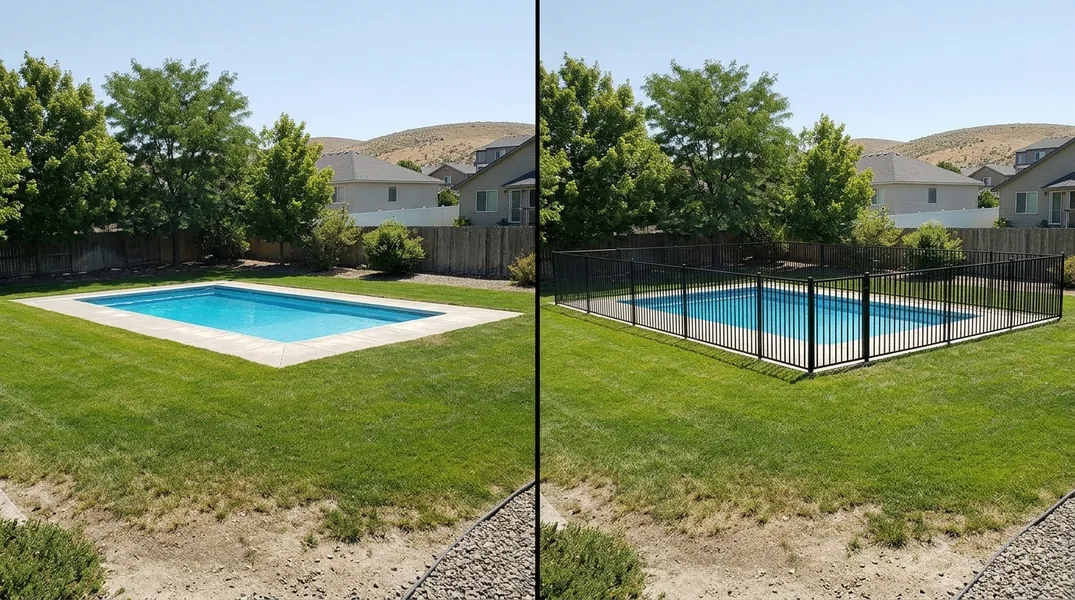
Understanding Washington State Pool Fence Code Requirements
If you're a homeowner in Kennewick or the surrounding Tri-Cities area with a swimming pool, you need to understand the legal requirements for pool fencing. Washington State has specific pool fence code requirements designed to prevent accidental drowning and unauthorized access to pools, particularly for young children. These regulations aren't optional suggestions; they're mandatory safety standards that apply to residential pools, and failing to comply can result in fines, liability issues, and worst of all, tragic accidents.
The Washington State Building Code and the International Swimming Pool and Spa Code (ISPSC) establish the baseline requirements for pool barriers. However, local jurisdictions in Pasco, Richland, and West Richland may have additional or more stringent regulations. Before you begin any pool fence installation project, it's critical to check with your local building department to understand exactly what applies to your property. This ensures your investment in a new fence protects your family legally and physically.
Pool Fence Height Requirements in Washington
One of the most commonly asked questions about pool fence installation is how tall the fence needs to be. Washington State requires that pool barriers be at least 4 feet high measured from the ground level on the pool side of the fence. This 4-foot minimum height is consistent across most jurisdictions in the Tri-Cities region, though some local codes may require additional specifications regarding the spacing of vertical or horizontal elements. The height requirement exists because it creates a meaningful physical barrier that discourages young children from attempting to climb over or access the pool area without adult supervision.
It's important to note that the measurement is taken from the side of the fence facing the pool, and the fence must be constructed so that there are no gaps, openings, or spaces larger than 4 inches that a small child could slip through. Materials like Wood & Privacy Fence Installation and Vinyl & PVC Fence Installation both meet height requirements when properly installed, though you'll want to verify with your local building inspector that your chosen material and design comply with all applicable codes. Additionally, if your fence has horizontal rails or boards, the spacing between them must be carefully measured to prevent a child from being able to use them as a ladder to climb over.
Self-Closing Pool Gate Requirements and Specifications
Perhaps the most critical component of any compliant pool fence is the self-closing pool gate. Washington State requires that any gate providing access to the pool area must be self-closing and self-latching. A self-closing gate automatically swings shut after someone passes through, and a self-latching gate has a mechanism that keeps it firmly closed and locked. These two features work together to ensure that even if someone forgets to close the gate behind them, it closes automatically and cannot be left standing open. The gate must close completely within 3 seconds and latch securely without requiring manual adjustment.
The self-closing pool gate must also be equipped with a latch mechanism positioned at least 54 inches above the ground level, measured from the bottom of the gate. This height requirement prevents young children from being able to reach and operate the latch themselves. Additionally, the gate should open away from the pool area, meaning it swings outward rather than inward, creating an additional layer of protection. When you're planning your pool fence installation, make sure your contractor understands these specific gate requirements and can install a gate that meets all Washington State specifications. Testing the gate mechanism regularly is also important to ensure it continues to function properly throughout the year.
Additional Pool Barrier Requirements Beyond the Fence
While a perimeter fence is the primary barrier, Washington State pool code requires multiple layers of protection. In addition to the fence itself, you may need to install additional safety measures depending on your pool configuration and local requirements. For example, if your pool has direct access to your house through a door or window, that door may need to be equipped with an alarm or self-closing mechanism. Some jurisdictions also require a pool safety alarm system that alerts you when someone enters the water, providing an extra level of protection especially for young children.
Removable pool covers and safety nets can serve as supplementary barriers, though they do not replace the requirement for a perimeter fence. If your pool is in Kennewick, you should also consider whether your property has any other water features or potential hazards that might require additional barriers. The goal of Washington State's comprehensive approach is to create multiple independent layers of protection so that if one safety measure fails, others remain in place. When you're planning your pool area improvements, think holistically about all the ways a child might gain unsupervised access to the water and address each potential pathway.
Choosing the Right Pool Fence Material and Installation Near Me
Once you understand the code requirements, you'll need to decide what type of fencing material best suits your needs, budget, and aesthetic preferences. Wood & Privacy Fence Installation is a popular choice for pool areas because it provides complete privacy, creates an attractive appearance, and can be customized to match your home's style. Wood fences require regular maintenance to prevent rot and weather damage, but many homeowners appreciate the natural look and the complete visual barrier they provide. Vinyl & PVC Fence Installation offers a lower-maintenance alternative that resists rot, fading, and insect damage while still meeting all height and spacing requirements.
Chain Link Fence Installation is another option that's often more affordable than wood or vinyl, though it doesn't provide privacy. Some homeowners also consider Aluminum & Ornamental Iron Fencing for a more decorative appearance. Regardless of which material you choose, the most important factor is that your fence is installed correctly to meet all Washington State pool fence code requirements. Working with an experienced local contractor who understands Tri-Cities building codes ensures your fence will pass inspection and provide genuine safety for your family. If you're ready to move forward with your pool fence project, Kennewick Fence can help you navigate the requirements and install a compliant, attractive barrier. Call us at (509) 581-6734 or request a free estimate to discuss your specific situation.
Getting Your Pool Fence Inspected and Permitted
Before you install a pool fence, you'll need to obtain the proper permits from your local building department. This isn't just bureaucratic red tape; the permit process ensures that your fence design meets all applicable codes and that a qualified inspector will verify the installation meets safety standards. In most Tri-Cities jurisdictions, you'll need to submit plans or specifications showing the fence height, gate mechanism, materials, and spacing details. Some departments may require a site plan showing how the fence relates to the pool and any other structures on your property.
After installation, a building inspector will visit your property to verify that the fence meets all requirements before issuing a final approval. This inspection protects you by ensuring your fence actually complies with the code and provides the safety it's intended to deliver. It also protects you legally; if an accident occurs and it's discovered that your pool fence didn't meet code requirements, you could face significant liability. When you work with Kennewick Fence for your pool fence installation, we handle the details of ensuring compliance and can guide you through the permitting process. The small investment in doing things correctly at the start saves you from potential problems down the road. Contact us today at (509) 581-6734 to discuss your pool fence project and learn how we can help ensure your fence meets all Washington State requirements.
Looking for a professional fence contractor in Kennewick? Kennewick Fence responds fast for all your fence needs.
Get a Free Quote